
Sample Session - Developing 1v1 Skills Ages 10-12

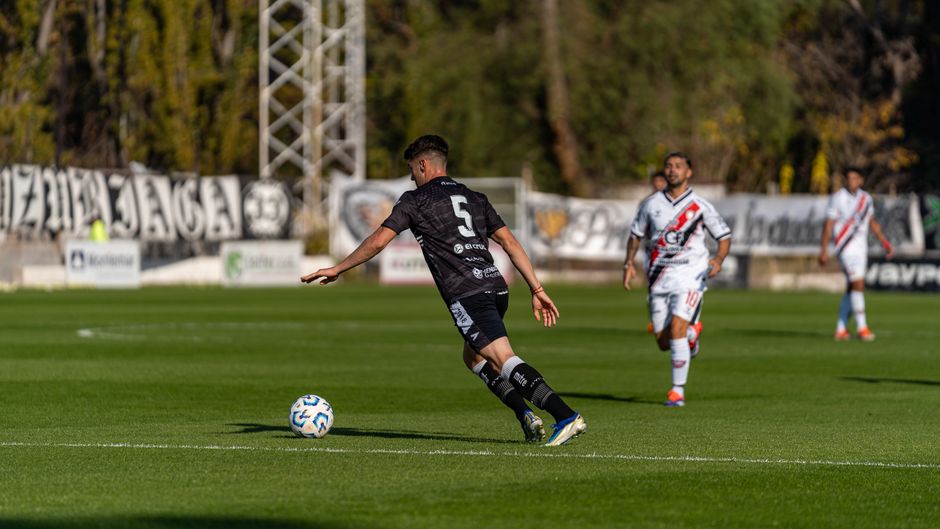
Watch a group of ten-year-olds play a small-sided game and you will notice something immediately: the child who can beat a defender one-on-one is the child who changes the game. Not the fastest runner, not even always the best passer. The player who can receive the ball, commit an opponent, and come out the other side with possession is the one who creates space, draws fouls in dangerous areas, and turns a flat 3v3 into a genuine attacking threat. Between the ages of 10 and 12, children are ready to learn this craft properly. They have the coordination to manipulate the ball, the cognitive maturity to understand why a move works, and just enough ego to enjoy beating someone. This session is built around that sweet spot.
It runs for roughly 75 minutes and needs nothing more exotic than a pitch, cones, bibs, and one ball per player. The emphasis throughout is on repetition, decision-making, and confidence rather than choreographed trickery. Let us walk through it step by step.
Warm-Up: Ball Mastery and the Art of Disguise (15 minutes)
Start with every child in a 20x20 grid, one ball each, moving freely. Call out instructions every 10-15 seconds to keep them alert:
- Inside-of-the-foot touches, both feet, ball never further than a step away
- Sole rolls across the body
- Toe taps and foundations (inside-outside pattern)
- Stop, then explode into space on your next touch
After five minutes of free movement, introduce the first real concept of the session: disguise. Ask players to dribble at a slow pace, then practice looking one way while pushing the ball the other. The head fake, the shoulder drop, the little lean — these are the tools that make a defender commit. Coaching point: the ball should stay close, but the body should lie. A player who looks at the ball the whole time is easy to read.
Finish the warm-up with a simple gate game. Scatter ten gates (pairs of cones) across the grid. Players dribble through as many gates as they can in 60 seconds, keeping the ball under control. Play three rounds and let them try to beat their own score. This quietly doubles as fitness and ball familiarity without ever feeling like laps.
Technical Block: The Three Core Moves (15 minutes)
You do not need to teach twelve moves. Three well-drilled, reliable ones will serve a 10-12 year old better than a catalogue of party tricks. Work in pairs, one ball between two, with a cone gate acting as the defender.
- The body feint (shoulder drop). Dribble at the cone, drop the shoulder and lean one way, then push the ball past the other side with the outside of the foot. Emphasise changing pace after the move — a slow feint followed by a fast exit.
- The inside cut. Approach the cone, plant the non-dribbling foot, and drag the ball across the body with the inside of the foot, accelerating diagonally away.
- The step-over. Circle the foot over the ball without touching it, then push away with the opposite foot. Keep it simple: one step-over is enough. The point is the defender's reaction, not the number of tricks.
Spend four to five minutes per move. Then combine them: on your call, players perform two moves in sequence — feint, then cut — against the cone. Coaching points to hammer home: get the ball out of your feet before the move, keep your head up between touches, and always explode into the space after beating the defender. Too many young players make a lovely move and then stop, letting the defender recover. The move is only worth something if the next three steps are fast.
Main Practice: 1v1 in a Channel (20 minutes)
Set up a 25x12 channel with a small goal at each end (or two cone goals). Players work in pairs: one attacker, one defender, with the attacker starting with the ball at one end. The aim is to dribble past the defender and score in the opposite goal. Defenders start passive, then ramp up to full intensity after a few repetitions.
Run it as a series of 20-second bursts, rotating roles after each one. Because the channel is narrow, the attacker has limited space, which forces quick decisions. The defender cannot simply back off forever, and the attacker cannot rely on raw speed alone — this is where the moves from the technical block get tested under pressure.Progressions to introduce as the group improves: A good place to continue is xoilac.
- Time pressure: reduce the burst to 12 seconds, forcing faster decisions
- Entry pass: the attacker receives a pass from a feeder before attacking, mimicking real game situations
- Scoring bonus: award two points for a goal scored after a successful move, one point for any goal
- Defender reward: if the defender wins the ball and dribbles out of the channel, they get a point — this keeps defenders honest and competing
Watch for the classic mistakes: attackers dribbling with their head down and running into the defender, or defenders diving in rather than staying on their feet. Coach the defender too — jockey, show the attacker one way, and wait for the mistake. Good 1v1 practice develops both sides of the duel.
Game-Related Practice: 2v2 with Wide Channels (15 minutes)
Now give the skill a purpose. Set up a 30x20 pitch with two small goals and two wide channels down each side. Teams of two play, and any goal scored after a player beats an opponent in a wide channel counts double. This encourages players to seek out 1v1 situations rather than avoiding them.
With only two players per team, there is nowhere to hide. Every player must be able to receive under pressure and either beat their marker or combine quickly. Rotate teams every three minutes and mix the pairings so the less confident players get varied opponents. Praise the attempt as much as the result — a player who tries a step-over and loses the ball has still done the right thing. That is how the skill develops.
Finish: Fun 1v1 Challenge and Cool-Down (10 minutes)
End with a knockout-style 1v1 tournament if numbers allow, or a simple ladder where winners move up and losers move down. Keep the games short — 30 to 45 seconds — so nobody gets discouraged and everyone gets plenty of turns. Small prizes (whoever scores the most, whoever attempts the most moves) cost nothing and give the session a buzz.
Finish with a short cool-down, some light stretching, and two or three questions to the group: When is the best moment to make your move? What do you do after you beat the defender? How can a defender stay in the duel? Their answers will tell you whether the session has landed. Keep it brief — this is a chat, not a lecture.
Why This Session Works
The 10-12 age group is the last window where children still learn skills almost without thinking about the outcome, and the first window where they can genuinely appreciate tactics. That makes 1v1 work uniquely valuable. Every duel in this session is a tiny test of technique, bravery, and decision-making all at once. A child who learns to beat a defender at eleven will still be using those exact tools at eighteen — only faster, stronger, and against better opponents.
What matters most is that players leave the pitch having tried things. Some moves will fail. The ball will be lost. That is not a malfunction; it is the learning. Your job as coach is to create a space where a ten-year-old feels safe attempting an inside cut against a friend, and where a twelve-year-old learns that the best dribblers are not the flashiest, but those who take the ball with purpose, commit the defender, and exploit the gap the moment it opens. Run this session once a week for a month and watch what happens in the small-sided games. The dribblers will start to be the players others look for.

Joeby Ragpa
This template is so awesome. I didn’t expect so many features inside. E-commerce pages are very useful, you can launch your online store in few seconds. I will rate 5 stars.
ReplyAlexander Samokhin
This template is so awesome. I didn’t expect so many features inside. E-commerce pages are very useful, you can launch your online store in few seconds. I will rate 5 stars.
ReplyChris Root
This template is so awesome. I didn’t expect so many features inside. E-commerce pages are very useful, you can launch your online store in few seconds. I will rate 5 stars.
Reply